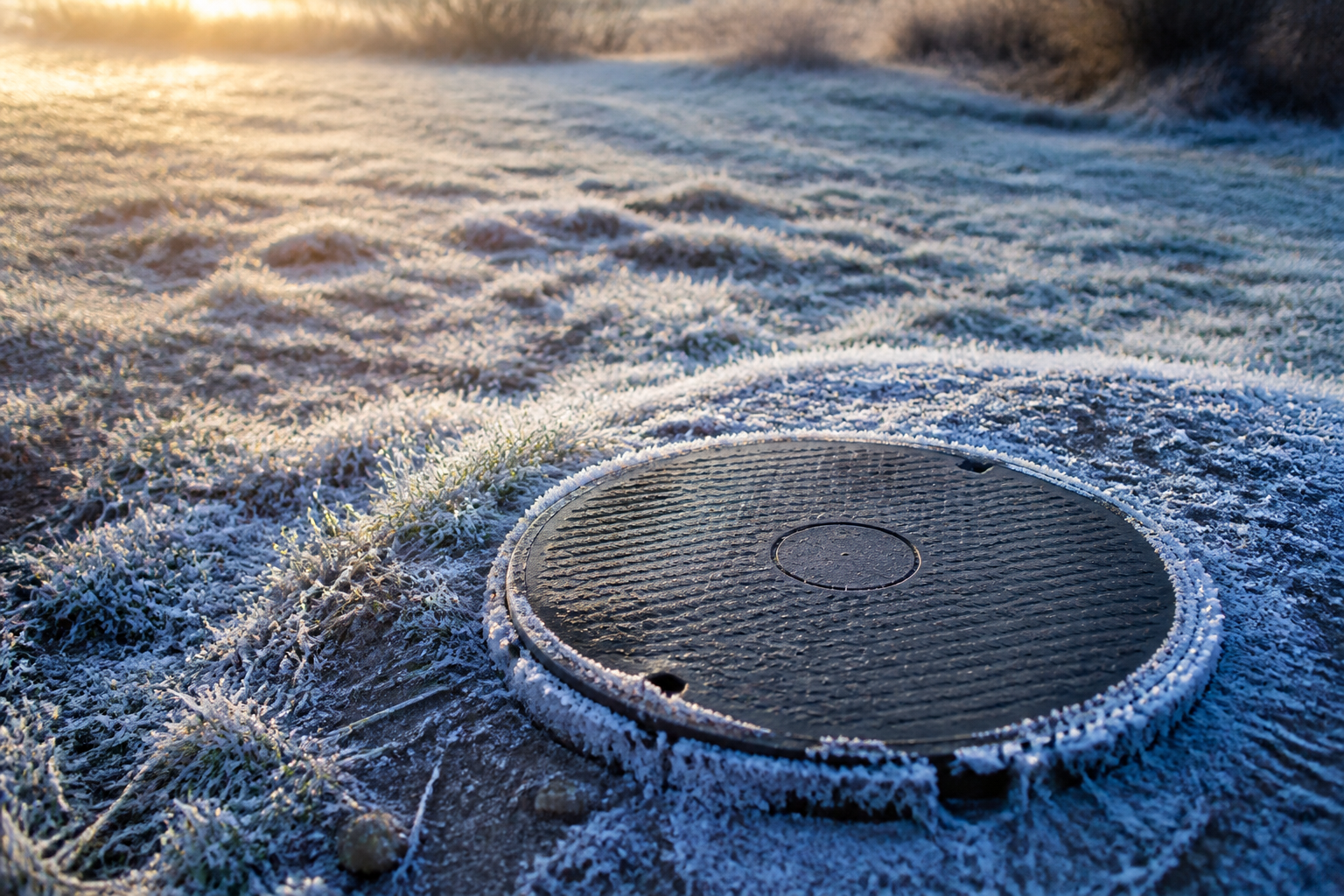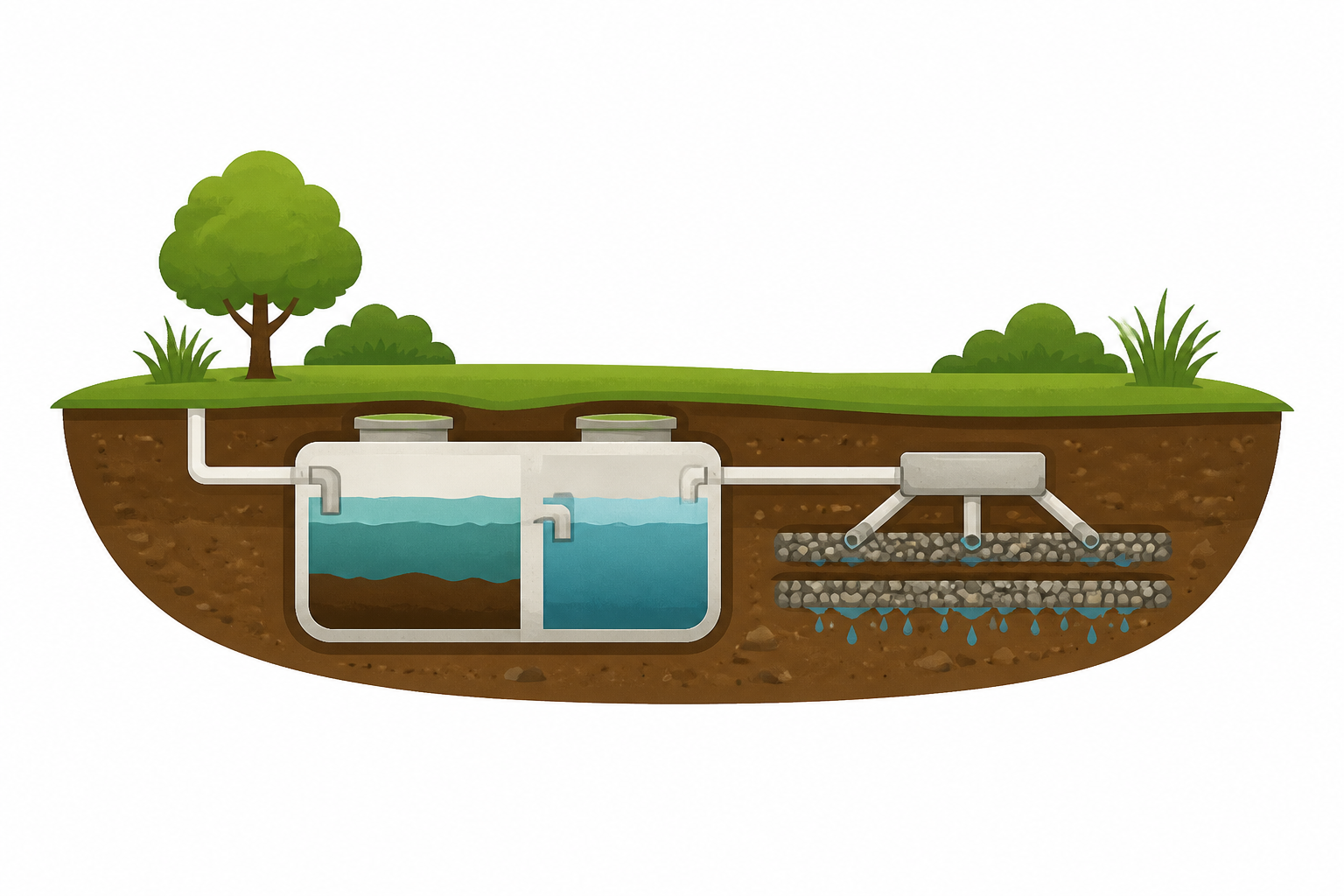
Septic System Freeze-Up: Signs, Prevention, and What to Do if It Happens

Learn why septic systems freeze, recognize early warning signs, and use proven prevention methods to protect your system through winter.

Septic Systems Explained by an Inspector
Learn why septic systems freeze, recognize early warning signs, and use proven prevention methods to protect your system through winter.

If you own an aerobic treatment unit in Mesa or Gilbert — Arizona permits and county records usually call it an advanced treatment unit, or ATU — maintenance is not optional the way it is on a conventional septic tank. Arizona regulates these as alternative onsite systems, and the state expects them to stay under … Read more
I’m standing in front of a standard septic tank right now, watching the probe needle settle at the sludge layer, and I can tell you with certainty: the “composting septic system” that homeowners keep asking me about doesn’t actually exist as a real, off-the-shelf product category. In my 15 years installing and inspecting systems across … Read more
I received a phone call in 2019 from a property owner near Knoxville whose drainfield had just undergone a complete replacement at a cost of $14,000. The culprit turned out to be a cluster of mature willows planted along the perimeter roughly a decade before. The root systems had penetrated and obstructed nearly every single … Read more
Most homeowners assume their septic system will announce trouble loudly and unmistakably when failure is imminent. That assumption is dangerously wrong. I’ve stood in basements where raw sewage was actively flowing across concrete while residents upstairs remained completely oblivious. The reason every one of those incidents could have been prevented is simple: the absence of … Read more
You’ll hear two pieces of conflicting advice about septic maintenance: one says a miracle additive eliminates the need for regular pumping, and the other insists you follow the EPA’s 3-to-5-year schedule religiously. The second one is correct — and the difference between believing the wrong advice and the right one can cost you hundreds, sometimes … Read more
That restriction isn’t bureaucratic caution — it’s survival information. Hydrogen sulfide and methane emerge from septic tanks in lethal concentrations. Exposure to hydrogen sulfide above 100 ppm triggers loss of consciousness within minutes. Deaths in septic tanks happen regularly each year, and most victims are rescue workers attempting to retrieve someone who went down first. … Read more
I pulled the inspection plate off a distribution box in Madison County that hadn’t seen maintenance in six years, and what I found told me everything about how silently water overload destroys rural septic systems. The box was cracked along its bottom seam, leaking treated effluent into the surrounding soil, but that wasn’t what concerned … Read more
Does your drainfield still have years of life left, or are you quietly pushing it toward collapse every time someone showers? The answer hinges on one overlooked variable: how much water your household sends into the ground each day. I’ve seen systems fail at 15 years and stay healthy at 25, and the difference almost … Read more
Home inspection reports and real estate listings tell you a lot about what’s sitting above the soil. They say nothing about what’s happening underneath it. Over 15 years of tank work across the rural Southeast—and more than 2,000 inspections logged—I’ve learned that the septic system living below the yard is almost always invisible until it … Read more